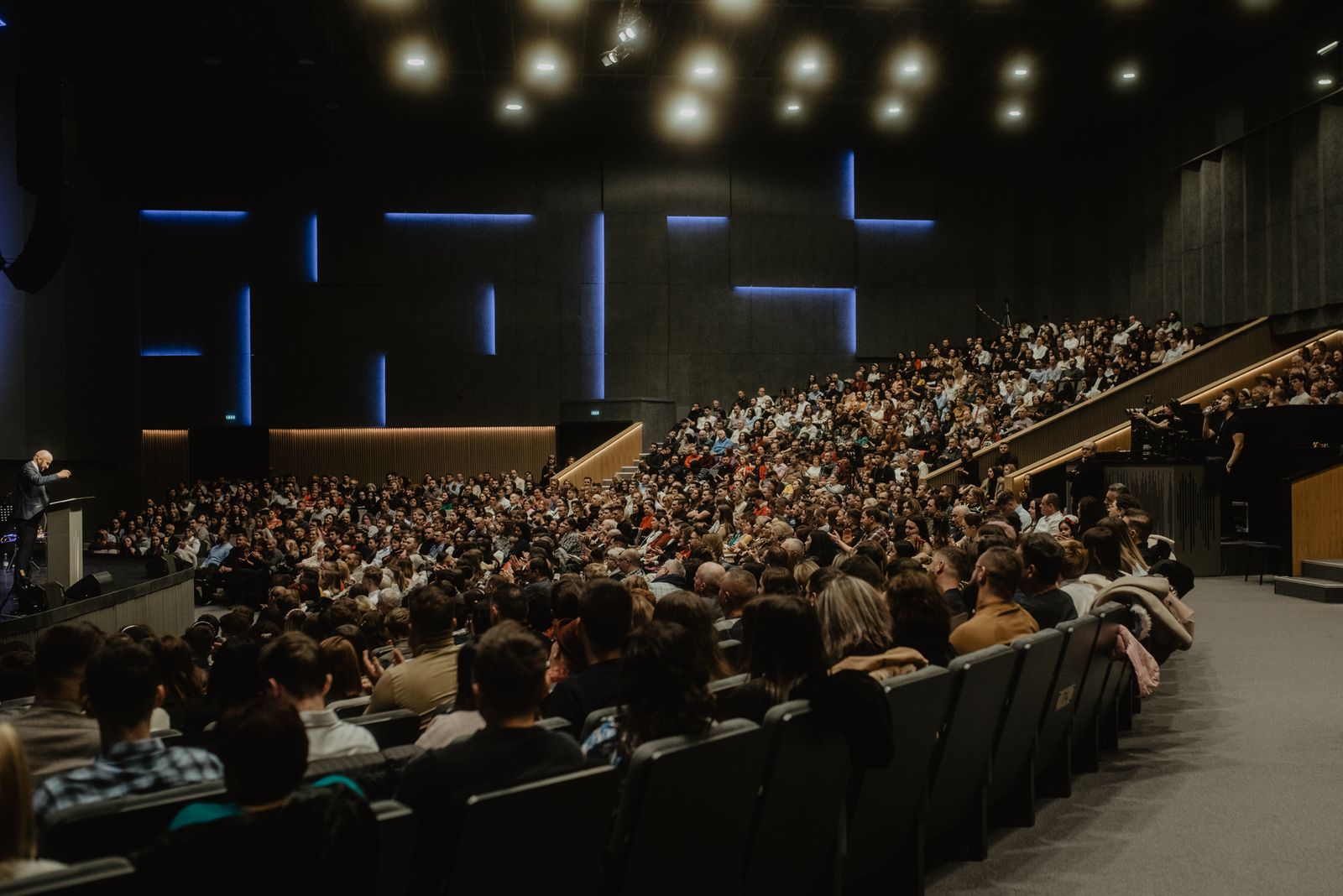
How can you offer conference interpretation without renting equipment?
Send the stage audio to Leengoconnect and let delegates listen on their own phones. Instead of booths, transmitters and a receiver desk, you display one QR code; each delegate chooses a language and hears AI-interpreted audio through their earphones, with subtitles available too.
The challenge
Interpretation equipment is a project of its own
Anyone who has organised interpretation for a conference knows the checklist: interpreter booths sized for the room, infrared radiators or RF transmitters, a receiver for every delegate who might need one, a distribution desk next to registration, spare batteries, charging cases and a technician to run it all.
Equipment guides and rental companies regularly warn about the same risks: receivers that go missing, liability charges for lost units, batteries that run flat mid-session and coverage gaps where the signal does not reach. Each extra language adds more interpreters and another channel.
For flagship events with large budgets, that can still be the right answer. Many conferences, however, need interpretation for a few dozen delegates across several languages, and the equipment overhead is out of proportion to the need.
What gets in the way
Common frustrations with conference interpretation logistics
Receiver distribution queues
Delegates wait at a desk to collect a headset, then again to return it.
Lost and unreturned units
Rental contracts often charge for every missing receiver.
Battery and charging management
Units must be charged, checked and swapped during long days.
Coverage limits
Infrared needs line of sight; radio systems have range limits and interference risks.
Booth space and setup time
Booths and cabling take floor space and setup hours before doors open.
Low uptake
Delegates do not always know interpretation is available, so receivers sit unused.
How Leengoconnect helps
A phone-based alternative for interpreted conference audio
One QR code per room
Show it on the holding slide, badges or printed table cards.
Delegates' own devices
No receiver desk, no collection, no charging cases.
Several languages per session
Each delegate picks a language; you see listeners per language live.
Desk feed input
Connect a clean feed from the audio desk to the organiser laptop.
Conference terminology
Upload speaker names, product names and acronyms to the session glossary.
Translated questions
Delegates can submit questions in their language for the moderator to review.
How it works
Three steps from speaker to listener
The speaker talks into a microphone
The organiser starts a session on a laptop or phone and selects the microphone, or an audio feed from the sound desk connected to the computer.
Attendees scan one QR code
Show the QR code on a screen, slide or printed card. Attendees open it in their phone browser and pick a language. No app, no account.
Everyone listens in their language
Translated audio plays through each person's own earphones, with live subtitles on screen for anyone who prefers to read.

Where it is used
Conference formats that suit phone-based interpretation
Keynotes and plenaries
The main stage reaches every language group from one feed.
Breakout rooms
Run a separate session with its own QR code for each room.
Association and member conferences
Recurring annual events with international members.
Faith and NGO conventions
Multi-day gatherings with delegates from many countries.
Planning
What you still need on the day
Phone-based interpretation removes the receivers, not the planning. You will need a laptop for each room running the session, a clean audio feed from the desk, reliable venue Wi-Fi or mobile coverage for delegates, and clear signage telling people translation is available and how to join.
Run a rehearsal with a real speaker before doors open. Check the measured delay on the dashboard, try the QR code from the back row and confirm that names in the glossary are translated the way you expect.
Interpreters still have a place
For negotiations, legal sessions or anything that forms an official record, use qualified human interpreters. Leengoconnect is AI translation and can make mistakes.
Frequently asked questions
Related guides
Simultaneous interpretation
Is AI a real alternative to simultaneous interpretation? Compare cost, delay, accuracy and equipment, and when human interpreters still win.
Live conference translation
Can attendees use their own phones for live conference translation? Yes: scan a QR code, choose a language, listen or read along.
Conference translation
How to translate a conference into multiple languages: choosing languages, audio setup, glossary, delegate onboarding and day-of checks.
Corporate event translation
The easiest way to add live translation to a corporate event: employees and guests hear translated audio and subtitles on their own phones.
Skip the receiver desk at your next conference.
Create an organiser account, set up one session per room and rehearse with your AV team.